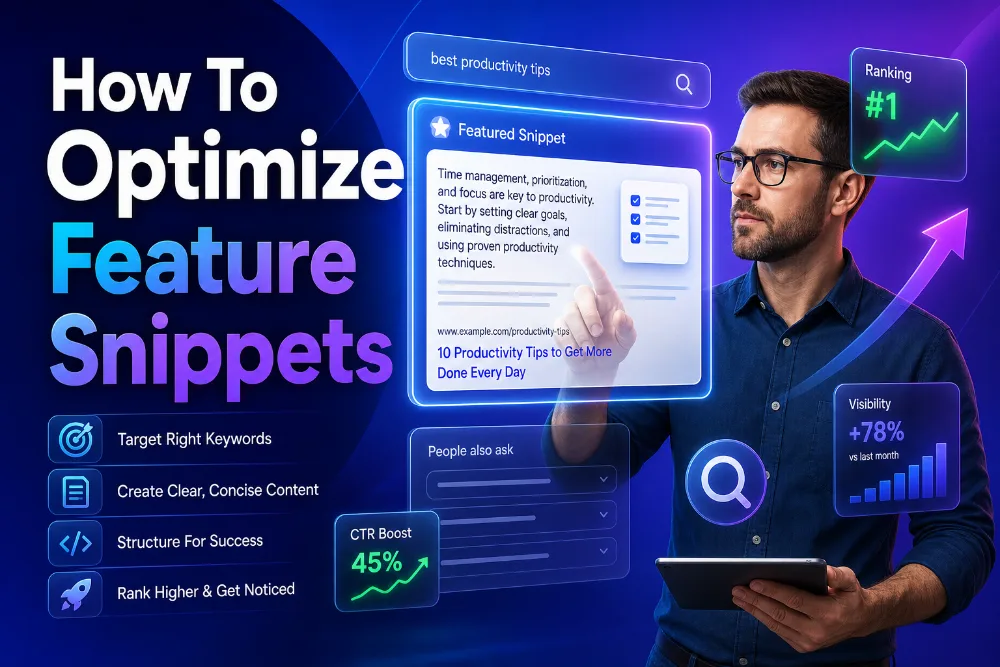
Featured snippets are becoming one of the most powerful tools for ranking at the top of search engine results. By appearing in the coveted “position zero,” featured snippets can increase visibility, improve click-through rates, and capture users’ attention at the moment they search for answers. But how can you optimize your content to earn these snippets?
In this article, we’ll guide you through the best practices for optimizing featured snippets, ensuring your content stands out from the crowd.
What Are Featured Snippets and Why Do They Matter?
Featured snippets are direct answers to user queries displayed at the top of search engine result pages (SERPs), typically above regular organic results. They are designed to provide users with quick, concise answers without requiring them to click on a link. As the digital landscape evolves, appearing in these snippets can significantly boost your site’s visibility and authority. This is why it’s essential to focus on optimizing featured snippets.
Different types of featured snippets are suited for various types of content. For example, you might be aiming to rank for a paragraph snippet, a list snippet, or even a table snippet, depending on the nature of your content. Each of these formats serves a specific purpose and targets different user intents. To increase your chances of appearing in these snippets, structure your content for maximum clarity and brevity.
For practical guidance on structuring your content effectively, explore specialist SEO for UK law firms, where you can get help to tailor your website’s SEO strategy for optimal visibility in search engine results.
Best Practices for Optimizing Content for Featured Snippets
Now that you understand the importance of featured snippets, let’s dive into some key strategies for optimizing your content to earn a spot in this prime position. Here are some best practices to keep in mind:
- Identify Snippet Opportunities
- Use keyword research tools to discover queries that already trigger featured snippets. These are the terms you want to target because they already show that Google considers them valuable to users.
- Analyze the competition: Review the top-ranking pages for your target queries and examine how their content is structured. Find ways to improve upon it by offering more detailed, more relevant, or clearer answers.
- Answer Questions Directly
- Featured snippets are designed to provide answers quickly. Be sure to structure your content so that it delivers a direct response to common questions in your niche.
- Use clear, well-formatted headings and subheadings that mirror the queries users are searching for. For instance, if the query is “how to optimize featured snippets,” include a heading such as “How to Optimize Featured Snippets” in your content.
- Format Your Content Properly
- For paragraph snippets, keep your answer between 40 to 50 words, providing enough information to answer the question without overwhelming the reader. Make sure it’s clear and direct.
- For list snippets, break your content into ordered or unordered lists to make it easy for Google to extract and display the information.
- For table snippets, ensure your data is clearly organized with headers and relevant rows that Google can easily extract.
To discover more about the specific steps to take in optimizing your content for legal websites, check out leading UK law firm SEO services, where you’ll find actionable insights into how structured content can help law firms rank higher.
Understanding User Intent to Boost Featured Snippet Rankings
To truly optimize featured snippets, you must understand user intent. Google’s algorithms are constantly evolving to better match search results with user intent, and appearing in a featured snippet requires that you address the specific needs behind the search query.
Aligning Content with User Expectations
When creating content for featured snippets, make sure to:
- Answer the question thoroughly but concisely. Featured snippets thrive on direct answers to user queries, so it’s vital that your content provides immediate value.
- Use language that aligns with the query. For example, if users are searching for “how to make money online,” tailor your content to match that phrasing and provide a clear, actionable answer.
- Use structured data and schema markup to help Google understand your content better and increase the likelihood of being featured.
By focusing on user intent and producing valuable, user-focused content, you can dramatically increase the chances of being featured in the most visible spots on the search results page. To improve your understanding of SEO strategies, consider learning more about UK local SEO for law firms, which offers advanced insights for law firms targeting localized audiences.
The Importance of Clear and Structured Content
One of the most important aspects of earning a featured snippet is structuring your content clearly. If your content is difficult to read or navigate, Google may not be able to pull out the necessary information. A well-organized page that’s easy for users to follow will have a much higher chance of appearing in a snippet.
Key Structuring Tips:
- Use bullet points or numbered lists: These formats are ideal for list snippets, making your content easy to digest.
- Include short paragraphs: Featured snippets often extract short, concise paragraphs. Avoid large blocks of text; break content into digestible pieces for better readability.
- Create clear subheadings: They help both users and search engines understand your content’s structure.
By keeping your content well-structured and easy to navigate, you not only enhance your chances of ranking for featured snippets, but also improve the user experience on your website. To dive deeper into the specifics of content optimization for legal websites, you can explore UK solicitor SEO services, which provides expert help and tips for improving SEO for legal content.
Measuring the Success of Your Featured Snippet Optimization Efforts
Once you’ve implemented the necessary optimizations, it’s important to track your progress. Featured snippets can sometimes fluctuate, so continuous monitoring is essential to ensure your content stays in the top spot.
Metrics to Track:
- Impressions: How often your page appears in search results, even if it’s not clicked.
- Click-through rate (CTR): How often users click on your content after seeing it in the featured snippet.
- Keyword rankings: Track how your targeted keywords are performing over time and how they impact your snippet rankings.
To effectively track the success of your efforts, use tools like Google Search Console and other SEO analytics platforms. These tools help you assess whether your optimizations are working and identify areas for improvement.
Conclusion
Optimizing for featured snippets requires a combination of targeted keyword research, content structuring, and an understanding of user intent. By following the best practices outlined in this article, you’ll be well on your way to earning these valuable positions in search engine results.
Whether you’re aiming for paragraph snippets, lists, or tables, it’s important to stay focused on delivering concise, actionable answers that meet user needs.
FAQs
How to Optimize Featured Snippets?
Optimizing for featured snippets involves creating clear, concise answers, structuring your content with headings, bullet points, and tables. Focus on answering common user queries directly, and make your content easy for Google to extract.
What Are Featured Snippets and How Do They Appear?
Featured snippets are special search results that appear at the top of Google’s search engine result page (SERP). They provide quick, direct answers to users’ questions, appearing above traditional organic search results for increased visibility.
How Can I Optimize for Paragraph Snippets?
To optimize for paragraph snippets, provide concise, clear, and direct answers to questions. Keep answers around 40-50 words, formatted in easy-to-read paragraphs. Ensure your content matches common user search queries for improved visibility.
How Can I Target List Snippets?
To target list snippets, organize your content in numbered or bulleted lists. Make sure each list item is concise and clear, answering the user’s query directly. Use headers that match search intent to increase chances of appearing in a list snippet.
Can Structured Data Help with Featured Snippets?
Yes, structured data helps Google better understand your content, increasing the chances of appearing in featured snippets. Using schema markup allows search engines to interpret your content’s context, making it easier for them to present relevant information.
What is the Role of User Intent in Featured Snippet Optimization?
Understanding user intent is essential for optimizing featured snippets. Create content that aligns with what users are looking for, whether it’s a definition, a how-to guide, or a comparison. Providing content that answers the user’s question directly increases your chances.
How Do I Optimize for Table Snippets?
For table snippets, organize data in a table format, ensuring it’s easy for Google to extract. Clearly label your rows and columns, and structure the data logically to provide a direct comparison or valuable insight to the user.
How Do I Track Featured Snippet Rankings?
Use tools like Google Search Console to track your featured snippet rankings. Monitor your impressions, click-through rates (CTR), and keyword rankings. This data can help you understand your snippets’ performance and identify areas for improvement.
Is It Possible to Appear in Multiple Featured Snippets?
Yes, it is possible to appear in multiple featured snippets for different types of queries. Optimize your content for a range of keywords, focusing on providing diverse, high-quality answers that match different snippet formats, such as lists and tables.
What Are the Benefits of Ranking in Featured Snippets?
Ranking in featured snippets increases your visibility, as your content appears at the top of search results. It also improves click-through rates (CTR) and boosts your website’s authority, helping drive more traffic and engagement.