
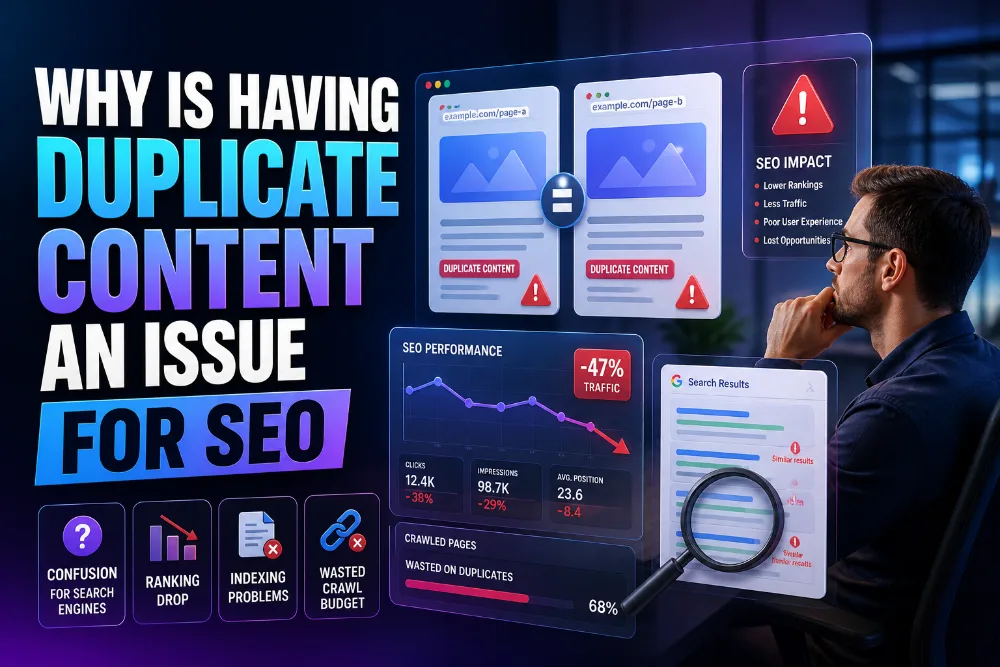
Duplicate content refers to content that appears in more than one location on the internet. For SEO (Search Engine Optimization), this can pose several challenges, as search engines, particularly Google, struggle to determine which version of the content to index or rank. In this article, we will explore why duplicate content is a significant issue for SEO, the causes behind it, and effective strategies to mitigate its impact on your site’s performance.
Search engines prioritize unique content because it provides more value to users. When multiple pieces of content are identical or nearly identical, search engines must make a decision on which version to rank. As a result, your website may lose valuable traffic, which could otherwise go to other pages with similar content. Moreover, search engines will often choose the version they believe to be most relevant, leaving you with missed opportunities for ranking. Therefore, understanding and addressing duplicate content is essential for improving your SEO efforts.
The Impact of Duplicate Content on Your SEO Performance
When you have duplicate content on your site, search engines like Google become confused. They are unsure which page to rank, and often, this results in lower visibility on search engine results pages (SERPs). This dilution of ranking signals can prevent your pages from achieving their full potential. Furthermore, it can negatively affect the overall SEO strategy of your website.
The most significant consequence of duplicate content is the loss of organic search traffic. For instance, search engines might pick a single page for indexing, leaving other, equally important pages without exposure. In some cases, content that is duplicated across various sites may even be ignored altogether. The result is wasted resources and a missed chance to reach your target audience.
An example of a page that could be impacted by duplicate content is a specialist SEO for UK law firms. This type of content, if repeated across multiple pages, can confuse Google’s indexing systems, leading to missed rankings. By ensuring that each piece of content is unique, you can prevent these issues and improve your site’s ranking.
Common Causes of Duplicate Content
Several factors can cause duplicate content to appear on your site, often without your knowledge. One of the most common issues is the improper configuration of your CMS (Content Management System). For example, certain platforms may create duplicate versions of a page due to URL parameters or different page versions like “www” vs. “non-www.” This happens when the CMS fails to treat these variations as the same page.
Another cause is pagination, often seen in e-commerce sites where products are spread across multiple pages. Although each page may contain similar content (product descriptions, titles, etc.), search engines may see this as duplicate material, which can negatively affect your rankings.
A significant contributing factor to duplicate content is also URL parameters, such as those used for tracking campaigns or sorting. These parameters often generate multiple versions of the same page, each of which is seen as unique by the search engine, despite them containing identical or nearly identical content.
To avoid such pitfalls, it is recommended to use techniques like canonical tags and redirects. These can tell search engines which version of a page is the “master” copy and should be indexed, thus solving issues related to duplicate content.
Why Duplicate Content Doesn’t Result in a Penalty
One of the most common misconceptions is that duplicate content results in a direct SEO penalty. While it’s true that duplicate content can harm your rankings, search engines do not apply penalties for duplicate content in the same way they do for other offenses, such as black-hat SEO practices. The issue lies more in how duplicate content affects search engine crawling and indexing.
When search engines detect duplicate content, they do not penalize the website, but instead choose to index only one version of the page, which could be at the expense of others. This is why it is crucial to ensure that each page on your site is as unique as possible to avoid the dilution of ranking signals.
For instance, if you’re providing leading UK law firm SEO services, having multiple pages that feature nearly identical content could result in lost ranking opportunities. However, with the right strategy in place, you can mitigate the negative impact of duplicate content and ensure that your pages rank well.
How to Detect and Solve Duplicate Content Issues
Detecting duplicate content on your website can be tricky, but there are several tools that can help. Google Search Console provides insights into issues related to duplicate content, including page variations and indexing errors. Additionally, third-party tools like Copyscape or Siteliner can help identify duplicated content across your website and the web at large.
Once you’ve identified the pages that have duplicate content, it’s time to implement a solution. Some of the most effective ways to address this issue include:
- Using Canonical Tags: By implementing a canonical tag, you can specify the original version of a page to search engines, guiding them to index the correct content.
- 301 Redirects: Redirecting duplicate content pages to the original page ensures that only the primary content is indexed and ranks.
- Noindex Tags: Applying a noindex tag to duplicate content tells search engines not to index that particular page, thus avoiding any potential ranking dilution.
For example, a page discussing UK local SEO for law firms could apply these strategies to ensure that the main page remains the focus for indexing.
The Role of Internal Linking in Managing Duplicate Content
Effective internal linking is another powerful tool for preventing the negative effects of duplicate content. When you use internal links properly, you direct search engines to the most relevant pages, which can help avoid indexing duplicate pages.
For example, when discussing SEO for law firms, it is essential to link to your primary pages and avoid linking to multiple pages that contain similar content. This ensures that your site is clear and cohesive to search engines, which ultimately helps with your rankings.
By using strategies like proper internal linking, alongside canonical tags and redirects, you can significantly reduce the likelihood of facing any SEO issues related to duplicate content.
Conclusion
In conclusion, duplicate content is an issue that can have a significant impact on your SEO efforts. While it may not result in a direct penalty, it can confuse search engines, dilute your ranking signals, and ultimately prevent your pages from ranking as they should. To avoid these negative consequences, it is essential to identify duplicate content, use appropriate solutions like canonical tags and redirects, and manage your internal linking structure.
With these strategies in place, you can ensure that your website remains in top shape for search engines. Remember, preventing duplicate content issues is key to optimizing your site’s visibility and ensuring that you achieve the best possible rankings.
FAQs
Why is duplicate content an issue for SEO?
Duplicate content confuses search engines, causing them to struggle in determining which page to index and rank. This can lead to lower rankings and missed traffic opportunities, reducing the SEO value of affected pages.
Can duplicate content result in penalties?
No, duplicate content itself doesn’t lead to penalties. However, search engines may ignore duplicate pages and prioritize one version, which can lead to lower visibility for the remaining versions, causing missed ranking opportunities.
How does duplicate content affect search engine rankings?
Duplicate content causes search engines to dilute ranking signals. This can prevent certain pages from being indexed or ranked properly, making it harder for your pages to appear in relevant search results and reach your target audience.
What are the main causes of duplicate content?
The main causes of duplicate content include CMS settings, URL variations (such as “www” vs. “non-www”), URL parameters, pagination issues, and copying content across multiple pages or websites. These factors create multiple versions of the same content.
How can I identify duplicate content on my website?
You can identify duplicate content using tools like Google Search Console, Copyscape, and Siteliner. These tools can help detect duplicate pages and URL variations that may confuse search engines and negatively impact your site’s SEO.
What is a canonical tag, and how does it help with duplicate content?
A canonical tag is an HTML element that informs search engines about the preferred version of a page. It helps avoid duplicate content issues by indicating which page should be indexed, ensuring that ranking signals are not diluted.
What is a 301 redirect, and how does it resolve duplicate content?
A 301 redirect is a permanent redirect that sends users and search engines to the preferred version of a page. It helps resolve duplicate content by consolidating traffic and ranking signals to a single URL, improving SEO performance.
Can pagination cause duplicate content issues?
Yes, pagination can create duplicate content if product or article pages are split into multiple parts. Search engines may consider these pages as duplicates because they often contain similar content. Using rel=”next” and rel=”prev” tags can help address this.
How does URL parameters affect duplicate content?
URL parameters, such as those used for tracking or filtering, can generate multiple versions of the same content, making search engines view them as separate pages. Using canonical tags or consolidating parameters can solve this issue and prevent duplicate content.
How can I prevent duplicate content on my website?
To prevent duplicate content, ensure that your CMS is configured correctly, use canonical tags for similar pages, apply redirects for duplicate pages, and avoid unnecessary URL parameters. Regularly check your site for potential duplicate content and address it promptly.